A Rainy Day Plan with One Fixed Point
A rainy day plan with one fixed point helps you protect the visit you care about, prepare practical weather decisions and avoid overbooking the day.
A rainy day plan with one fixed point works best when the fixed point is a timed commitment, not a place that dictates every other stop. Choose the indoor visit you most want to make, confirm what could disrupt it, and decide in advance which optional plans you are willing to drop.
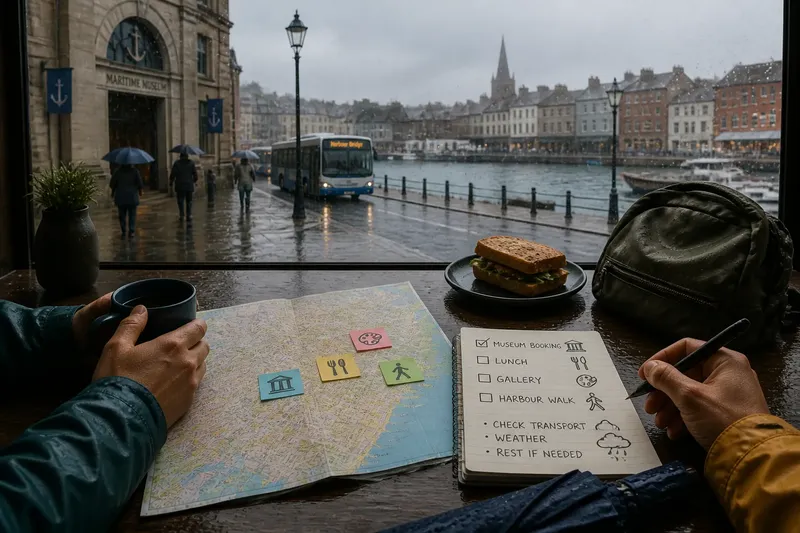
Say you are staying in the fictional city of Bellhaven and have booked a morning visit to its maritime museum. Rain is forecast, and the museum matters more to your group than anything else that day. The plan below is invented: its starting point is that confirmed booking, its actions are to check the relevant conditions and rank the other activities, and its intended result is a clear decision about what to keep if the day changes.
What should your fixed point protect?
Make the fixed point the commitment that would be hardest to replace: a timed admission, a booked guided visit or an event that only runs at a particular time. If there is no such commitment, choose the experience that matters most, but keep its timing flexible where possible. This is different from building the whole day around one neighbourhood or trying to preserve a route in a particular order.
For the Bellhaven travellers, the museum booking is the fixed point because it has a set arrival time and is the day’s main purpose. They note the venue’s entry instructions and check its official visitor information for opening details. Their decision is straightforward: if the booking remains valid, protect the visit; if the venue changes its arrangements, contact it or use its stated rebooking options before planning the rest of the day.
How can you rank the rest of the day?
Sort optional plans by how much they matter and how easily they can move. A harbour walk might be pleasant but weather-dependent; lunch can happen before or after the museum; a second indoor attraction may be expendable if the group is tired. Ranking stops makes it easier to change the day without treating every item as equally important.
- Check the museum’s confirmation and entry instructions; if the booking is valid, keep its arrival time, and if it is not, contact the venue before travelling.
- Check whether lunch needs a reservation; if it does, keep the booking only if it fits around the museum, and if it does not, choose a flexible place to eat.
- Check the forecast for the period of the harbour walk; if conditions look comfortable, keep the walk optional, and if rain makes it unpleasant, replace it with a rest indoors.
- Check the gallery’s opening information; if it is open and the group has energy, consider it, and if it is closed or the group is tired, leave it out.
- Check the route to the museum for transport notices or access issues; if the usual route is disrupted, use an available alternative, and if no suitable route is available, contact the venue about the booking.
- Check whether anyone in the group needs a shorter walk or a place to sit; if so, choose stops with those options, and if the plan lacks them, remove a stop rather than press on.
It is not worth tracing every possible covered passage or comparing a long list of cafés. Check only the details that could change a decision: whether a commitment is still usable, whether a route is available and whether the group can manage the plan comfortably.
What should stay flexible?
Keep optional activities loose unless they also have a booking or a strict opening window. A meal, a gallery visit or a walk can often move or disappear; another fixed reservation may leave little room to respond to a delay. Leave some unassigned time between commitments so a late tram, a longer visit or a need to rest does not force a rushed choice.
In Bellhaven, the travellers keep lunch unbooked and treat the harbour walk as conditional. They decide that the gallery is a bonus rather than a must-do. That ranking gives them a useful trade-off: if the museum takes longer than expected, they can eat and skip the gallery instead of hurrying through both.
What should you check before setting out?
On the day, check the information that could change whether you can keep the fixed point: the venue’s latest notice, your booking details and any relevant transport updates. Use the local forecast to make a practical choice about clothing and optional outdoor plans, not to script the day by the minute.
Pack for the conditions with a rain jacket or umbrella, shoes suitable for wet pavements and a bag that protects essential items. If someone in the group has access or mobility needs, check the venue’s access information and the journey to it. When the details affect safety or whether a person can take part, ask the venue or transport operator for current guidance.
How do you decide when the plan changes?
Use a simple order of decisions: protect the commitment if it remains feasible, remove the lowest-priority optional stop, then reassess what the group wants to do next. If the booking cannot be kept because of a closure or disruption, contact the relevant venue or operator and decide whether to rebook, substitute another activity or call the day early.
Imagine the Bellhaven travellers start with a confirmed morning museum booking, an unbooked lunch, a possible gallery visit and a harbour walk. They check the museum notice and find the booking is still valid; a transport update says their usual tram route is disrupted. They take an available bus that still gets them to the museum in time, then have lunch nearby. The rain continues and the group is ready to rest, so they drop the gallery and harbour walk. The resulting decision preserves the booked visit and meal while removing two optional stops; the trade-off is seeing less, in exchange for avoiding a rushed and uncomfortable afternoon.
If the weather improves later, reconsider the walk only if the group still wants it and the route feels suitable. A change in conditions is a chance to choose again, not an obligation to restore every item you removed.
What questions help you make the call?
Should you book the indoor visit in advance?
Book when the venue requires it, offers timed admission or says advance arrangements are needed. If entry is flexible, check the venue’s current information and keep the timing open where that gives you useful room to respond.
How do you choose which activity to drop?
Drop the lowest-priority activity that is hardest to fit under the current conditions. Keep the commitment that matters most, then check whether the remaining plan still works for the group’s energy and access needs.
What if transport disruption threatens your booking?
Check the operator’s current service information and look for an available alternative that suits your group. If no workable route remains, contact the venue before setting out and ask what options apply to your booking.
Should you keep an outdoor activity as an option?
Keep it conditional if the route and weather are suitable and the group still wants to go. If rain, access conditions or fatigue make it a poor fit, choose a rest or another manageable activity instead.
How can you make a rainy day plan with one fixed point?
Write down the commitment you are protecting, the information that could invalidate it and the optional activities in order of importance. For each optional plan, decide what would make you keep it and what you would do instead. This turns a rainy day plan with one fixed point into a set of usable choices rather than a timetable you must defend.
Before leaving, agree on a practical reason to change course, such as a disrupted route, a venue notice or someone needing to rest. When that reason appears, make the next decision from the information available, and let the lowest-priority plan go without trying to rescue the original itinerary.